
That’s why certifications matter. They show whether a provider is trained, insured, and operating legally, not just “keen to help”.
What certifications should they have before taking on tree work?
They should be able to show nationally recognised units of competency for arboriculture, plus proof of current insurance and safe-work systems. In practice, the most useful checks are a mix of formal qualifications, industry memberships, and compliance documents that match the job’s risk.
If a tree trim service near me hesitates to share evidence, that alone is a red flag.
Why does a Certificate II or III in Arboriculture matter?
A Certificate II or III in Arboriculture is one of the clearest signs they’ve completed structured training for pruning, rigging basics, chainsaw use, and worksite safety. These are Australian qualifications commonly delivered through TAFE or registered training organisations (RTOs).
For a tree trim service near me, this helps confirm they understand correct pruning cuts, tree biology basics, and risk controls.
Should they have specific chainsaw certifications?
Yes. They should hold relevant chainsaw units of competency for the type of work being done, such as ground-based chainsaw use and, where applicable, aerial cutting. Chainsaw tickets don’t automatically mean “good arborist”, but they do show the operator has been assessed.
A tree trim service near me should be ready to explain which chainsaw units their climbers and ground crew hold.
Do they need a White Card for tree trimming jobs?
Yes, if their work is on a construction site or in construction-like settings. In Australia, a White Card confirms they’ve completed general construction induction training and understand basic site safety obligations.
Even for domestic work, a tree trim service near me with a White Card often signals they take safety systems and compliance seriously.
What is AQF Level 3 or Level 5 arborist status, and does it matter?
It can matter a lot. Many Australians refer to “Level 3 arborists” when they mean a Cert III qualified arborist, and “Level 5” when they mean a Diploma-level arborist. Higher qualification levels generally suit higher-risk or more technical work like complex rigging plans, tree risk assessments, and managing protected trees.
If the job is complex, a tree trim service near me should have someone senior overseeing the work.
Should they be an ISA Certified Arborist in Australia?
It’s worth checking, especially for advice-driven jobs. The International Society of Arboriculture (ISA) Certified Arborist credential indicates they’ve passed an exam covering pruning, soil, diagnosis, safety, and tree care standards, and they must maintain continuing education.
A tree trim service near me with ISA certification is often better positioned to explain why a pruning approach is recommended, not just quote and cut.
Is Arboriculture Australia membership a meaningful sign?
Yes, it can be. Arboriculture Australia is a key industry body, and membership can indicate they’re engaged with professional standards, industry updates, and best practice. It’s not a legal requirement, but it adds credibility when paired with qualifications and insurance.
A tree trim service near me can usually provide a membership number or listing details if asked.
What insurance should they show before they start?
They should carry Public Liability Insurance suitable for tree work, and if they have employees, Workers Compensation insurance as required in their state or territory. Public liability is vital because tree trimming can damage roofs, fences, vehicles, or neighbouring property in seconds.
Any tree trim service near me should provide a current Certificate of Currency on request.
Do they need a Safe Work Method Statement (SWMS)?
For higher-risk construction work, yes, and for many real-world tree jobs, having one is a sensible safety measure anyway. A SWMS outlines hazards and controls such as exclusion zones, traffic management, drop zones, chainsaw PPE, and rescue planning for climbers, making tree work safety requirements an important part of project planning.
A tree trim service near me doing complex removals, stump access, or roadside work should be comfortable supplying a SWMS.
What does EWP certification mean, and when is it required?
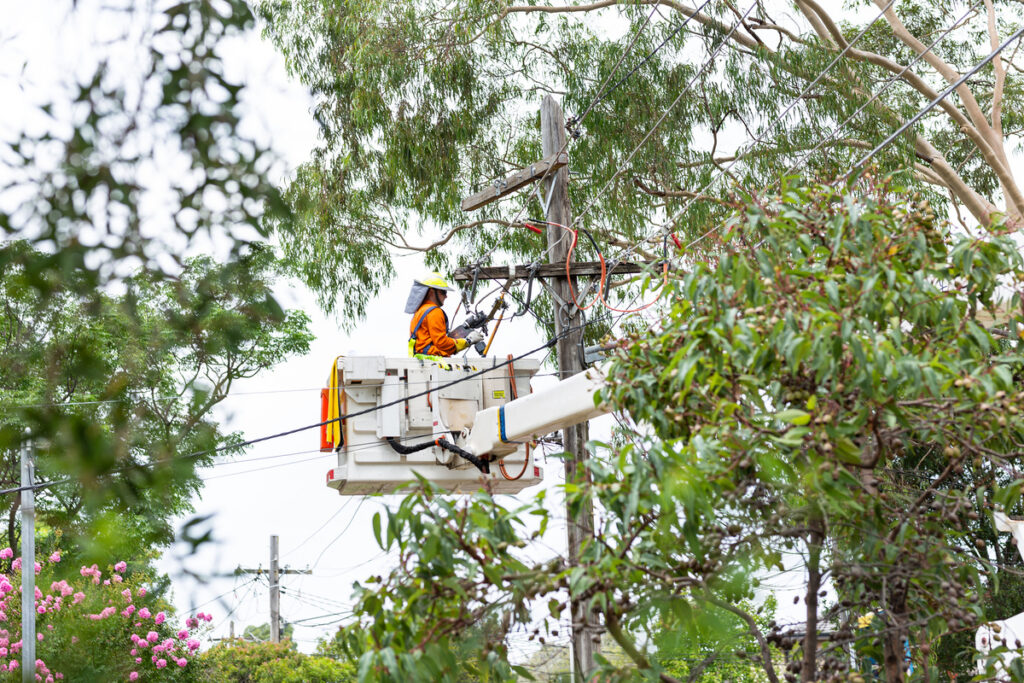
EWP means Elevated Work Platform, like a cherry picker. If they’re using an EWP, the operator may need a High Risk Work Licence (HRWL) for boom-type EWPs over 11 metres, and they should still have documented training for the specific machine.
If access is tight or above structures, a tree trim service near me using an EWP should show they’re licensed and experienced, not just “giving it a go”.
What about working near powerlines in Australia?
This is one of the biggest risk areas, and it’s heavily regulated. They should understand and comply with the local electricity distributor’s rules, safe approach distances, and any requirements for an authorised line clearance arborist where applicable.
If branches are close to service lines, a tree trim service near me should clearly state whether they can legally do the work, or whether the distributor needs to attend.
Should they follow Australian Standards for pruning?
Yes. They should be familiar with relevant Australian Standards used across the industry, particularly for pruning practices and amenity tree management. Standards help reduce bad outcomes like over-pruning, lopping, topping, or unbalanced canopy reduction that leads to weak regrowth.
A tree trim service near me should be able to explain their pruning approach in plain English and link it to accepted practice.
How can they prove they’re allowed to work on protected trees?
They should be able to talk through council rules, exemptions, and permit pathways in the local area. Across Australia, many councils protect significant, native, or habitat trees, and penalties can apply for unauthorised works.
A tree trim service near me should not pressure owners to “just do it quietly”. They should help confirm whether approval is needed first.
What qualifications matter for tree risk assessments?
If they’re offering formal risk advice, they should have higher-level training or credentials specific to risk assessment, plus experience documenting findings. In Australia, this might include Diploma-level arboriculture knowledge, ISA Tree Risk Assessment Qualification (TRAQ), or equivalent training pathways used by consultants.
If the job needs a risk report for insurance, strata, or a neighbour dispute, a tree trim service near me should show evidence they’re qualified to assess, not just prune.
Are first aid and rescue training important for arborists?
Yes, because tree work can go wrong fast. They should have at least one trained first aider on site, and for climbing work, they should have an aerial rescue plan and practice. This is not paperwork for show; it’s what reduces response time when an injury occurs.
A tree trim service near me should be willing to outline their rescue readiness without getting defensive.
What’s the simplest way to verify credentials without getting overwhelmed?
They can ask for a short “credentials pack” before accepting a quote. It should include copies of qualifications, insurance certificates, and any relevant licences, plus a brief outline of how the crew will access and control the site.
A reliable tree trim service near me will treat this as normal due diligence, not an inconvenience.
What questions should they ask when comparing two providers?
They should ask questions that force specifics, not vague promises. The goal is to confirm the provider is trained for the exact risks present on that property, in that Australian suburb, under that local council.
Here are practical questions to ask a tree trim service near me:
- Which arboriculture qualification does the lead worker hold (Cert II, Cert III, Diploma)?
- Can they provide a current Certificate of Currency for public liability?
- Will they supply a SWMS for this job?
- Who will be climbing, and what are their chainsaw and aerial units?
- How will they protect roofs, fences, gardens, and neighbours’ property?
- What happens with green waste removal, and is it included in writing?
- Are there powerlines, and what is their plan for compliance?
What are the biggest red flags if they won’t show certifications?
If they refuse to provide evidence, it often suggests they’re uninsured, unqualified, or using subcontractors without oversight. Another common red flag is a provider who pushes heavy lopping or topping as the default solution, because it’s fast and profitable, but often harmful.
If a tree trim service near me can’t provide documentation and a clear method, it’s usually safer to keep looking.
How should they balance price with certification?
They should treat certifications as part of risk management, not a luxury add-on. The cheapest quote can become expensive if it causes property damage, neighbour disputes, council penalties, or unsafe outcomes that require follow-up work.
A properly qualified and insured tree trim service near me may not offer the lowest upfront price, but clear qualifications, insurance, scope, and safety procedures can make the service more predictable, particularly for complex or high-consequence work.
What’s a safe, certification-first checklist before they book?
They should confirm training, insurance, and job method in writing before any saw starts. This reduces misunderstandings and makes it easier to compare quotes fairly.
A quick checklist for any tree trim service near me:
- Cert II/III (or higher) in Arboriculture for the lead arborist
- Relevant chainsaw competency for ground and aerial work
- White Card if the worksite requires it
- Public liability insurance (Certificate of Currency)
- Workers compensation coverage where required
- SWMS for higher-risk work
- EWP licence/training if using a boom lift
- Powerline compliance plan if services are nearby
- Clear pruning scope aligned to accepted Australian practice
- Council permit awareness for protected trees
Used properly, this checklist helps ensure a tree trim service near me is qualified, prepared, and operating like professionals in Australia.
FAQs (Frequently Asked Questions)
What certifications should a tree trim service near me have before starting tree work?
A reputable tree trim service near me should hold nationally recognised units of competency for arboriculture, current insurance certificates, and established safe-work systems. This includes formal qualifications like Certificate II or III in Arboriculture, industry memberships, and compliance documents tailored to the job’s risk level. If they hesitate to provide evidence of these, it’s a red flag.
Why is a Certificate II or III in Arboriculture important for tree trimming services?
A Certificate II or III in Arboriculture indicates that the tree trim service near me has completed structured training covering pruning techniques, rigging basics, chainsaw use, and worksite safety. These Australian qualifications confirm their understanding of correct pruning cuts, tree biology basics, and essential risk controls for safe and effective tree work.
Do tree trimming professionals need specific chainsaw certifications?
Yes. Tree trim services near me should have relevant chainsaw units of competency depending on the type of work performed, such as ground-based chainsaw operation or aerial cutting. While chainsaw tickets don’t automatically guarantee expertise, they demonstrate that operators have been assessed and trained appropriately.
Is holding a White Card necessary for tree trimming jobs in Australia?
Yes, especially if the work takes place on construction sites or similar environments. A White Card confirms that the tree trim service near me has completed general construction induction training and understands basic site safety obligations. Even for domestic jobs, having a White Card shows a commitment to safety systems and compliance.
What does ISA Certified Arborist status mean, and why is it valuable?
ISA Certified Arborist status means the professional has passed an exam covering pruning, soil management, diagnosis, safety standards, and overall tree care. They also maintain continuing education. A tree trim service near me with ISA certification can offer expert advice on pruning approaches beyond just quoting prices and performing cuts.
What insurance coverage should I expect from a tree trim service near me before they start work?
They should carry Public Liability Insurance suitable for tree work to cover potential damages to roofs, fences, vehicles, or neighbouring property. If they employ staff, Workers Compensation insurance is also necessary according to state or territory laws. Always request a current Certificate of Currency as proof before hiring.